
Menu
- HOME
- OUR TEAM
- DENTAL SERVICES
- SYMMETRY SMILES
- RESOURCES
- FORMS
- FINANCE PLANS
- CONTACT
- BLOG
29th Apr 2026 published by: Dr. Patrick Ryan
type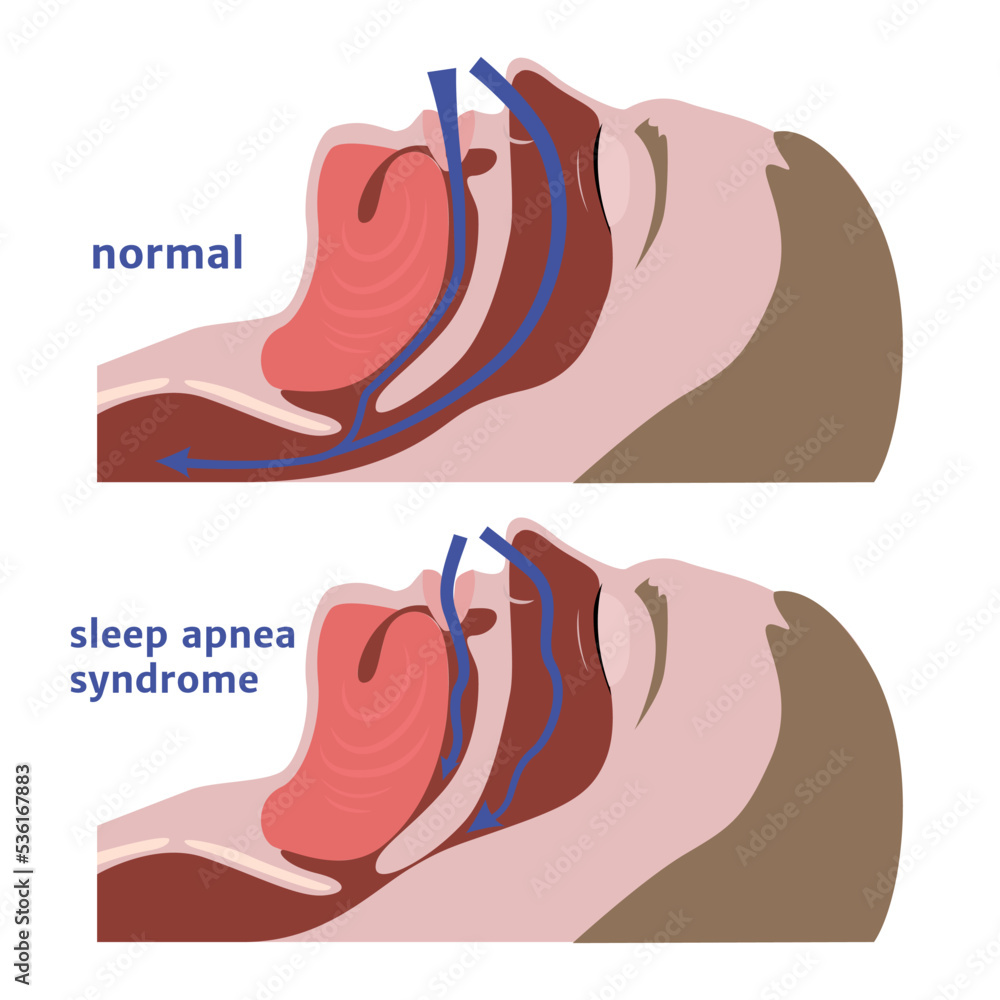
By Symmetry Dental | Kingston, Canberra
You might be surprised to learn that the first person to notice the signs of sleep apnoea isn't always your GP or a sleep specialist — it's often your dentist.
At Symmetry Dental on Jardine Street in Kingston, Canberra, our team looks beyond cavities and gum health at every appointment. The mouth is a window into your overall wellbeing, and for patients with undiagnosed sleep apnoea, it can tell a story that no one else has thought to read.
Here's what we're looking for — and why it matters.
Obstructive sleep apnoea (OSA) is a condition where the airway partially or fully collapses during sleep, causing repeated interruptions to breathing throughout the night. It affects an estimated one in four Australian adults to some degree, yet many cases go undiagnosed for years.
The consequences extend well beyond feeling tired. Untreated sleep apnoea is linked to high blood pressure, increased cardiovascular risk, poor concentration, and — critically for your dental team — a range of very specific oral health changes.
When your airway narrows or closes during sleep, your brain sends a distress signal that partially wakes you. One common physical response is grinding or clenching your teeth — a condition known as bruxism. Over time, this produces telltale wear: flattened cusps, chipped enamel, fractured fillings, and tooth sensitivity.
Bruxism and sleep apnoea are so closely linked that studies suggest up to 25% of people with OSA also grind their teeth at night. If we notice significant grinding wear at your check-up, it's one of the first things we'll ask about.
Take a look at the edges of your tongue — do they have a wavy, indented appearance, almost like they've been pressed against a row of teeth? That's exactly what's happened. During sleep, the tongue can push firmly against the teeth as your body attempts to keep the airway open. Repeated night after night, this leaves visible imprints along the tongue's sides.
A scalloped tongue takes only seconds to identify and is one of the most reliable early indicators of an airway issue.
The shape of the roof of your mouth directly influences the space available for airflow through the nasal passages above it. A narrow, high-arched palate — one that crowds the dental arch and compresses the airway — is consistently associated with a higher risk of obstructive sleep apnoea.
This is a structural finding we assess as part of a thorough examination, particularly in patients who snore or report poor sleep quality.
If you regularly wake up with a parched mouth or a sore throat, there's a strong chance you've been mouth-breathing through the night. Mouth-breathing typically means the airway is compromised — and it creates its own dental problems.
Saliva is your mouth's natural defence system. Without it working overnight, you're at significantly higher risk of tooth decay, gum disease, and bad breath. Persistent dry mouth is always worth discussing at your appointment.
The uvula — the soft tissue that hangs at the back of the throat — takes a battering when someone snores heavily or experiences repeated airway collapse. The vibration and trauma cause visible changes: redness, elongation, and swelling. An enlarged uvula narrows the airway further and is a common finding in patients with moderate to severe OSA.
This is something we examine routinely as part of a thorough soft tissue assessment.
Gastro-oesophageal reflux disease (GERD) is a frequent companion to sleep apnoea. The pressure changes caused by a collapsing airway can draw stomach acid upward into the throat and mouth during sleep — often without the patient being aware of it.
This acid silently dissolves tooth enamel, particularly on the inner surfaces of the upper front teeth. The erosion pattern is distinctive, and we can often identify it before any symptoms appear.
When two or more of these signs appear together, our team won't simply note them and move on. We use validated chairside tools — including the Mallampati scale (which rates airway visibility) and the Epworth Sleepiness Scale — to assess your risk level, and where appropriate, we'll refer you to your GP or a sleep specialist for a formal sleep study.
A dentist cannot diagnose sleep apnoea. But we can be the first to raise the conversation.
If sleep apnoea is confirmed, your dentist has an active role in treatment. A custom-fitted mandibular advancement device (MAD) is a discreet, comfortable oral appliance worn during sleep. It works by gently repositioning the lower jaw slightly forward, opening the airway at the back of the throat and reducing the frequency of breathing interruptions.
For patients with mild to moderate OSA — or for those who cannot tolerate CPAP therapy — a MAD is a clinically proven alternative backed by strong research.
At Symmetry Dental, we believe excellent dental care goes beyond the teeth. Whether you've been told you snore, you wake up exhausted, or you've simply noticed some unexplained tooth wear, we'd love to take a closer look.
Our practice is conveniently located on Jardine Street, Kingston, Canberra, and we welcome new patients of all ages.
your


